Content
A Review of Tests for English Proficiency
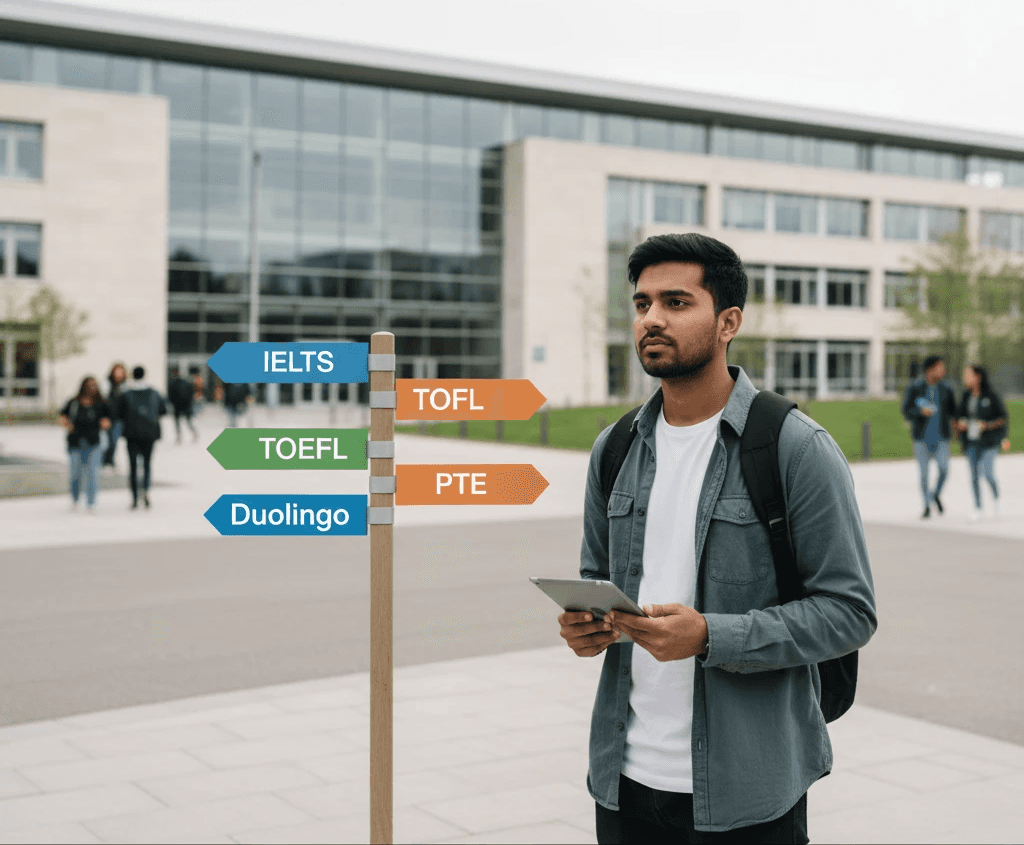
A nice interview won't rescue you if you want to study overseas in 2026. It won’t. Universities don’t rely on conversations anymore. They want proof. Standardized. Measurable. On paper. Or on a screen. One score that speaks when you’re not in the room. That’s where English tests step in. Four of them dominate this space right now. You’ll hear different opinions. Plenty of noise. However, these four ultimately determine whether your application proceeds or silently pauses.
IELTS
The old giant. British-backed. Been around forever. Trusted almost everywhere. Universities know it. Visa officers respect it. It’s not fast, though. Paperwork moves slowly. Results can test your patience. Still, it rarely gets questioned. When this score lands on a file, nobody argues. That’s why it’s still standing, years later.
TOEFL
The American favourite. Built for classrooms, lectures, and research halls. Very academic. Very structured. Less human, more machine. You talk to a screen, not a person. Headphones on. Mic in front. Hours staring at questions, clicking, recording, moving on. Some students like that. Others hate the silence. It works. But it feels cold. And yes, a bit exhausting.
PTE
Completely computer-based. No examiner. No small talk. Just you and the screen. Results come fast. Sometimes shockingly fast. AI does the scoring. No moods. No mercy either. That’s why Canada and Australia love it. Clean. Predictable. Efficient. Miss a word, though, and the system notices. Instantly.
Duolingo
Cheap. Online. Quick to finish. Results don’t make you wait. Sounds perfect, right? That’s why students jump in. But here’s the catch. Many visa offices still look at it sideways. Not fully convinced. A little suspicious. These exams all assess the same four abilities on paper: speaking, listening, reading, and writing. Same goals. Very different journeys. And very different risk levels, whether people admit it or not
Test Format Comparison: Listening, Reading, Writing, Speaking
IELTS Test Format
Still the most “human” exam. You sit across from an actual person. Real questions. Real reactions. Not just buttons and timers. It feels like a conversation, not a system test. Some students relax. Some panic. That’s the trade-off. Human judgment brings warmth. Also unpredictability. And yeah, that part makes people nervous.
● Listening: 4 sections. Multiple accents. Easy to lose focus.
● Reading: Academic passages. Tricky wording. Meant to confuse.
● Writing: Task 1 (report or letter). Task 2 (essay). No shortcuts.
● Speaking: Face-to-face with an examiner. Human. Unpredictable.
Pros?
Natural conversation. That’s the biggest plus. You’re not talking to a machine. You explain. You react. You clarify. It feels real. More like a discussion than a test. The evaluation feels human, too. Not just scores and patterns. For students who speak well in real life, this format actually helps.
Cons?
Human bias exists. Always. Some examiners are patient. Others? Brutal. Smiles don’t always help. One bad day can cost marks. You never fully know what’s coming. That’s the risk with a “human” exam. Real, unpredictable, messy. But that’s also what makes it feel alive.
TOEFL Format
Everything happens on a screen. No human eyes are watching you. No subtle reactions. Just clicks, headphones, microphone. It feels cold. Efficient. Predictable. Some students love it. Others miss the human touch. No surprises. No faces. Just you and the system.
● Listening: Academic lectures. Long, detailed, sometimes tricky.
● Reading: University-style texts. Heavy on details. Meant to trap you.
● Writing: Integrated + independent tasks. No shortcuts.
● Speaking: Talk to a microphone. Alone. No human feedback. Feels robotic.
Pros?
Scoring is consistent. No moods. No human error. You know what to expect. No surprises. Fair. Predictable. That’s the upside. But sometimes, it feels cold. Too mechanical. Lacks the nuance a human examiner might catch.
Cons?
Indian students often sound robotic. Flat. No natural flow. It trips the system. Scores take a hit. You can prepare all you want, but the mic doesn’t forgive. Feels unfair sometimes. But that’s how this test works.
PTE Format
Purely AI. No feelings. No second chances. It doesn't care if you're nervous, exhausted, or distracted. It doesn't care if you're nervous, exhausted, or distracted. Every answer counts. Every mistake shows. No mercy. No excuses. That’s how it works. Cold. Efficient. Brutally honest.
● Listening: Fast-paced. Multitasking nonstop. One slip costs marks.
● Reading: Short passages. Technical. Tricky wording. Hidden traps.
● Writing: Summarize first, then the essay. No shortcuts.
● Speaking: Read aloud. Repeat sentences. Strict. Relentless.
Pros?
Predictable. That’s the PTE for you. You know the pattern. You know what’s coming. Makes planning easier. Retake-friendly too. Mess up once? No problem. Try again. Scores come fast. No long waits. That’s the upside. Simple. Efficient. But still, one tiny mistake can sting.
Cons?
Miss one word. Just one. And the score drops. Instantly. No excuses. No forgiveness. The system doesn’t care if it was a slip or a nervous twitch. It records. It judges. Brutal, but fair. That’s the reality with AI scoring.
Duolingo Test Format
Looks easy. Feels quick. Cheap. Online. Perfect, right? Not always. Questions adapt. They get harder as you go. One wrong move, and the test shifts. Feels simple at first. Then suddenly, it doesn’t. Many students underestimate it. That’s where trouble starts.
● Adaptive test. Questions change based on performance
● Video interview + writing sample
● The entire test was done online
Pros?
Convenient. You can take it from home. No travel. No waiting rooms. Cheap too. Almost half the price of other tests. Sounds perfect. But remember, easy money sometimes comes with hidden risks.
Cons?
Still questioned by embassies. Always. They see it on paper and pause. Not fully convinced. That’s the risk. You might get in. Or you might face extra scrutiny. Easy today, messy tomorrow. Students forget that part. Don’t.
Score Validity & Country Acceptance
All four tests? Valid for 2 years. No exceptions. Expired? Scores mean nothing. Acceptance? That’s a different story. It changes by country. Some universities trust one test over another. Visa officers have their favourites, too. You can’t assume all scores are equal everywhere. That’s a mistake many students make.
Country-wise Acceptance Snapshot
● USA: PTE, TOEFL, and IELTS are commonly used, partially.
● UK: IELTS preferred. TOEFL accepted. Duolingo Limited.
● Canada: IELTS & PTE dominate. Duolingo is growing but risky.
● Australia: IELTS & PTE are strongest. TOEFL accepted. Duolingo Limited.
Universities may accept Duolingo. Often they do. But visa officers? They might not fully trust it. That gap? It matters. Big time. Your admission could be fine, but the visa process? Tricky. Students ignore this. And then regret it later.
Which Test Is Best for the USA?
Let’s be blunt. Some tests work better for certain countries. Others? Risky. Pick wrong, and you pay time, money, and stress.
Best Choices for the USA
● TOEFL iBT – safest
● IELTS Academic – equally strong
● Duolingo – acceptable in many universities, risky for visas
● PTE – accepted, but fewer universities
Which Test Is Best for the UK?
The UK doesn’t play games. They want proof. Clear, reliable, recognized. Best choices? Start with IELTS Academic or the UKVI gold standard. TOEFL iBT? Accepted too. PTE? Works, but less common. Duolingo? Limited. Mostly conditional offers. If your course needs visa sponsorship, IELTS still dominates.
Which Test Is Best for Canada?
Canada cares about speed and immigration clarity. They want fast, reliable proof. Best choices? IELTS Academic is still the safest. PTE Academic is rising fast, gaining popularity. Duolingo is accepted by many colleges, but a visa risk exists. TOEFL is accepted, but less popular. Right now, PTE is killing it in Canada. Fast results. High acceptance.
Which Test Is Best for Australia?
Australia loves predictability. They like clear, reliable scores. Best choices? PTE Academic. IELTS Academic. TOEFL. Duolingo has limited use. If speed matters, PTE wins hands down. Quick results. Less stress. Students who plan fast often go this route. Simple. Efficient.
Which English Test Is easiest for an average Indian Student?
For an average Indian student, IELTS is the easiest and safest option, period. Not because it’s simple, but because it’s forgiving. You talk to a real person. You can pause, correct yourself, and recover. One small mistake doesn’t destroy your score. Most average students with 55–70% UG or PG marks comfortably score 6.0–6.5, and with practice, 6.5–7.0 is realistic. PTE comes next—not friendly, but predictable. If you master patterns, even average students hit 55–65, sometimes higher. Miss a word, though, and the system punishes you instantly. Duolingo looks easy, cheap, short, online—but it’s deceptive. Adaptive questions trap average students, and visa officers still doubt it. Many score 95–105 when universities want 110+. TOEFL is the hardest for average students. Long academic listening, robotic speaking, zero human sympathy. Most struggle to cross 80. Bottom line? For average students, IELTS works best, PTE works with training, Duolingo is risky, and TOEFL is brutal. Anyone saying otherwise is selling comfort, not truth.
Difficulty Level Comparison (Real Talk)
There’s no “easy” test. Only easier for you.
Difficulty Perception (Indian Students)
● IELTS: Medium. Speaking scares introverts.
● TOEFL: Medium–Hard. Listening heavily.
● PTE: Hard initially. Becomes easy with pattern practice.
● Duolingo: Looks easy. It can surprise you.
Truth?
Most failures happen due to poor preparation, not test difficulty.
Cost Comparison (2026 Updates – Approx.)
Costs change. Budget accordingly.
● IELTS: ₹17,000 – ₹18,000
● TOEFL : ₹16,500 – ₹17,500
● PTE : ₹15,900 – ₹16,500
● Duolingo: ₹4,800 – ₹5,000
Cheap doesn’t mean safe. Remember that.
Test Duration & Results Timeline
Time matters when deadlines close in.
Test | Duration | Results |
IELTS | ~2h 45m | 3–5 days |
TOEFL | ~3 hours | 4–8 days |
PTE | ~2 hours | 24–48 hours |
Duolingo | ~1 hour | 48 hours |
PTE is the fastest. No debate. | ||
Universities Accepting Duolingo in 2026
Yes, Duolingo acceptance is growing. Slowly, but surely. Countries seeing growth? USA mid-tier and some top universities. Canada has colleges, a few universities. UK conditional acceptance mostly. Australia Limited. Sounds easy, right? But listen carefully. Acceptance visa confidence. Universities may say yes. Embassies might still question it. That gap can cost you. Always plan with caution.
Which Test Should Indian Students Choose?
Here’s the uncomfortable truth. There isn't a single, ideal test. You squander time, money, and energy if you make the incorrect choice. How to choose? Look at your target country. Check the university ranking. Think about visa risk. Assess your speaking confidence. Mind your timeline pressure. Safe picks? USA, top universities: TOEFL or IELTS. UK: IELTS only. Canada: IELTS or PTE. Australia: PTE or IELTS. Tight budget and want quick admission? Duolingo, but cautiously. Anyone saying “Duolingo works for everyone” is lying. Or inexperienced. Simple as that